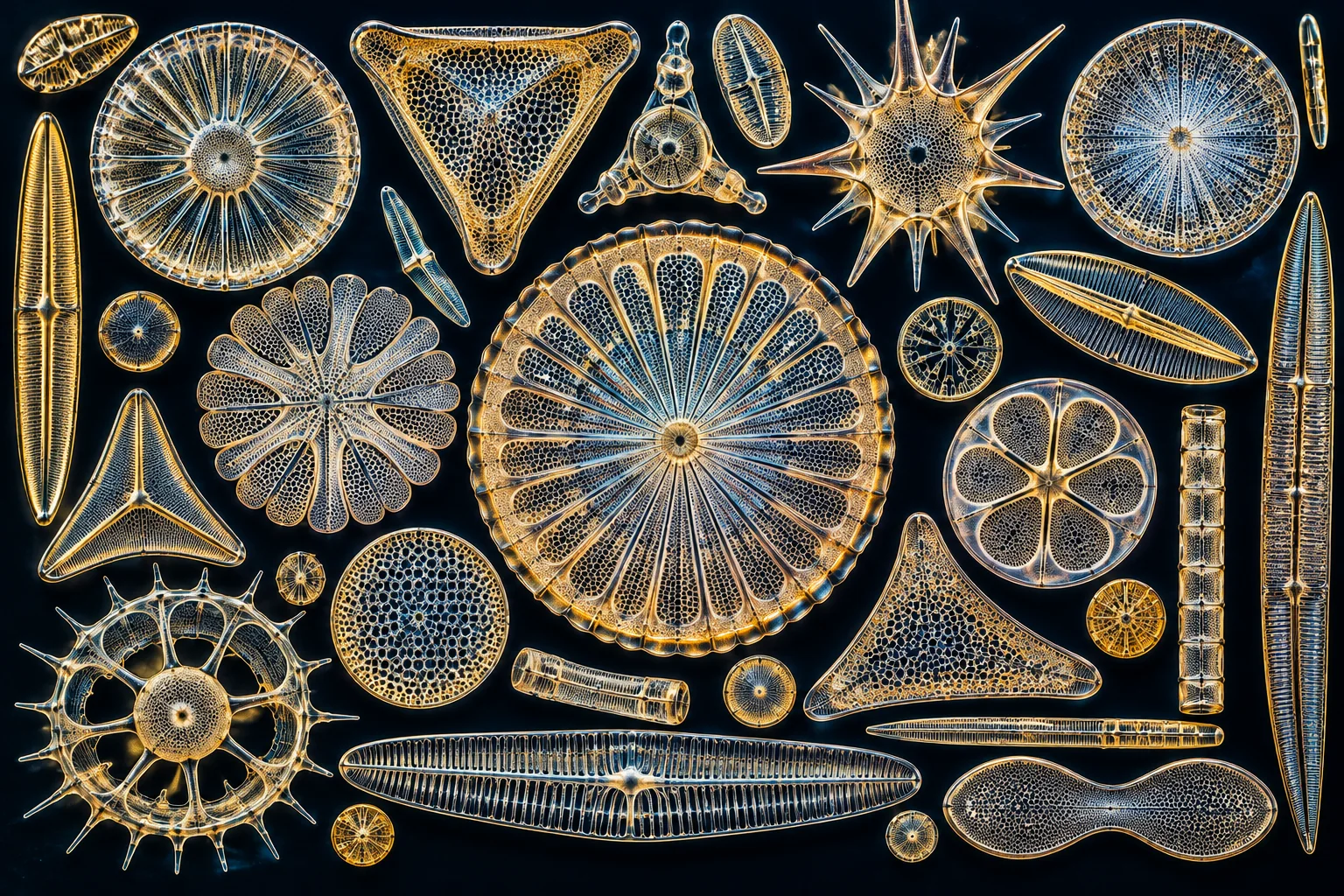
Historic microscopes have extraordinary stories. These are some of the most worth examining.
Strange stories, rigorous evidence
Every piece treats seller descriptions as hypotheses and links back to institutional records where available.
The Strange World of Victorian Microscope Slides
Tiny monuments, miniature portraits, diatoms arranged like jewelry: Victorian microscopy turned the invisible into an art form.
Explore the story →The Microscopic Photographs of John Benjamin Dancer
A Victorian inventor shrank buildings, portraits and entire written passages onto slides small enough to hide beneath a fingertip.
Explore the story →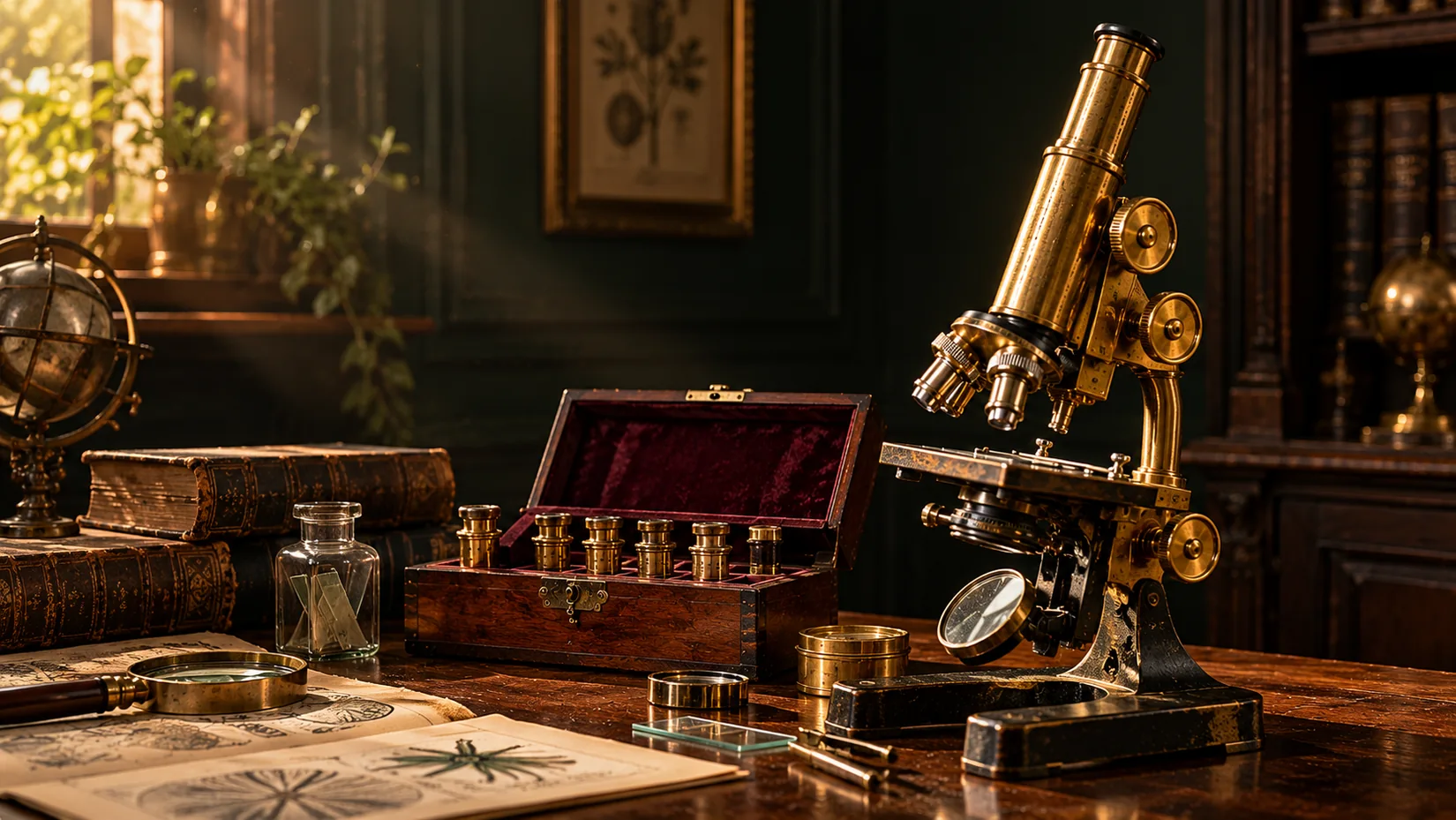
Why the Original Microscope Case Matters
An empty cutout in a nineteenth-century wooden box can reveal more about missing accessories than a polished microscope ever will.
Explore the story →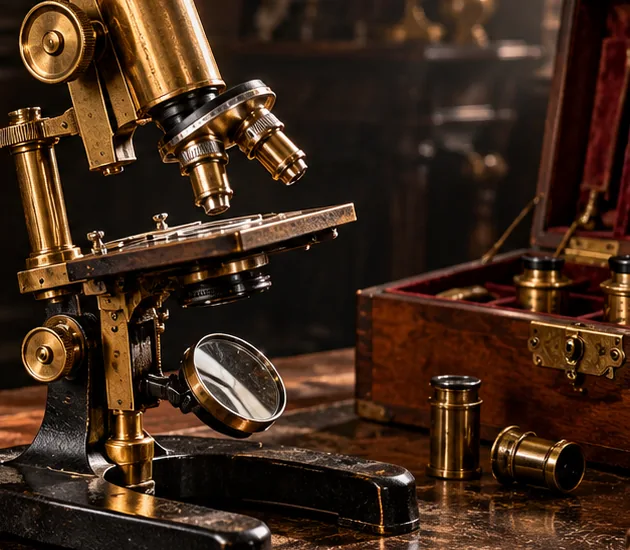
Carl Zeiss vs. Ernst Leitz: What Collectors Actually Compare
Two great German optical names, two different instrument histories, and a shared trap: the maker on the objective may not be the maker of the stand.
Explore the story →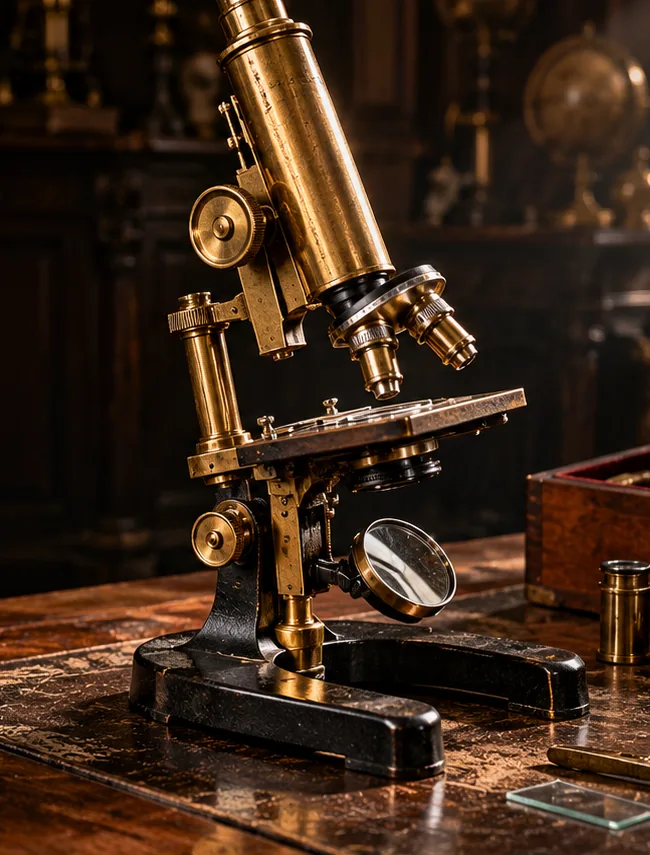
Anatomy of a Victorian Brass Compound Microscope
Every gear, joint and mirror on an old compound microscope has a job. Learn the language of the instrument before you buy it.
Explore the story →The Culpeper Microscope: An Elegant Eighteenth-Century Design
A microscope that looks like a miniature pavilion offers a window into the technology—and craftsmanship—of the early Enlightenment.
Explore the story →Can You Still Use an Antique Microscope?
The satisfying answer is sometimes yes—but preservation and safe handling come before the urge to turn every brass knob.
Explore the story →Reproduction or Original? Warning Signs in Antique Microscope Listings
A convincing brass finish, a decorative wooden box and an antique-sounding title do not establish that an instrument is old.
Explore the story →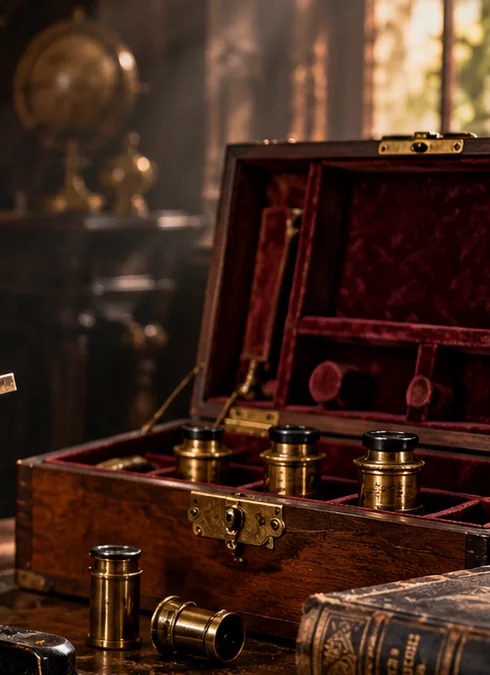
How to Compare Sold Antique Microscope Prices Without Fooling Yourself
The most tempting number on eBay is usually the asking price. A disciplined collector learns to separate offers, sales, condition and provenance.
Explore the story →How to Read Antique Microscope Maker Marks and Engravings
A place name, a number and a famous surname can provide clues—but none should become a made-up manufacture date.
Explore the story →