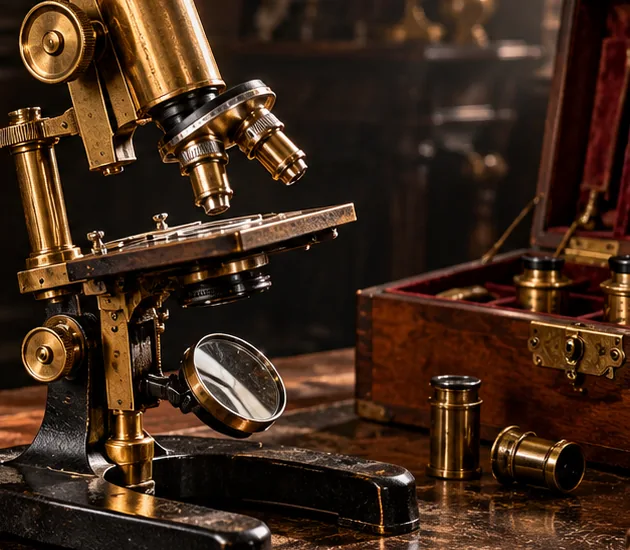
A repeatable way to inspect a specimen before bidding. These notes prioritize evidence over decorative language and make no claim to appraise an individual instrument.
1–4: Establish identity
Record the full maker’s engraving, serial number, overall stand design and any dealer or retailer labels. Retailer plates are not always manufacturer plates. Photograph the underside of the base and inside the case.
5–8: Inspect mechanics and optics
Check whether coarse focus travels smoothly; fine focus engages; the stage is complete; and all included eyepieces and objectives are present. Do not force stiff gears. Ask for a demonstration video if the seller claims optical functionality.
9–10: Check historical integrity
Look for mismatched finishes, screws, stage components or fittings. Compare the case’s recesses to the instruments and accessories currently included. An empty cutout can reveal a missing lens or condenser.
11–12: Price the actual transaction
Compare completed sales where possible and account for insured shipping, tax, international customs and return policy. A low asking price may not be a bargain if the instrument is incomplete and transport is costly.
Use the interactive checklist
Our 12-point condition checker helps organize the inspection. It produces a review-readiness score rather than pretending to authenticate a microscope or appraise it.